From technical to strategic: the evolution of filmmaking
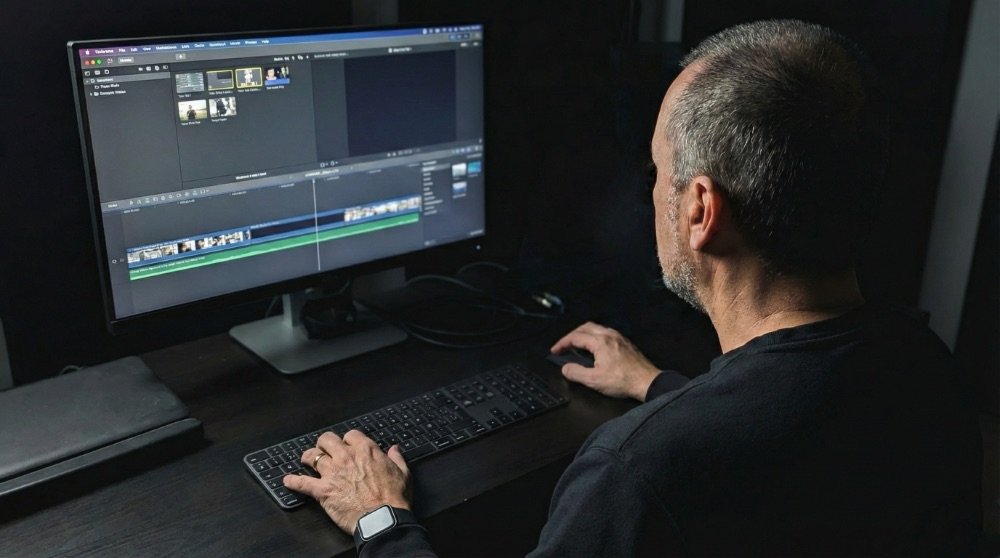
Video marketing is no longer what it was three years ago. It's not even what it was one. And if you're still evaluating your vendors by looking at the cameras they use or the software they know, you're using the wrong compass.
An unprecedented transformation
The speed of this change has no historical precedent. If the agricultural revolution took millennia and the industrial revolution took centuries, AI is rewriting entire industries in a matter of months. The numbers speak for themselves: by 2025, 63% of video marketers are already using AI tools to create or edit content-it was 18% just two years ago. And the direction is clear: By the end of 2026, 39% of all digital video ads will be built or enhanced with generative AI.
We are no longer in the Information Economy, where whoever had the most data and the most technical know-how won. We have entered the Wisdom Economy: value comes not from the accumulation of operational skills, but from the wisdom of knowing what to do with what you know.
The problem of technique for its own sake
AI can already produce film-style videos in a matter of minutes. Tools such as Veo, Kling e Runway have democratized video production in a way that until recently seemed like science fiction. Productions using AI today reduce 25% costs and get 40% to market faster.
But there is an underlying misunderstanding that is costing many dearly: technology does not solve communication problems-it amplifies them if it is not strategically guided. We have seen companies invest thousands in AI video by producing content in series without a coherent narrative direction. The result: a sea of videos that no one watches. Because they lack the one thing no tool can automatically generate - a deep understanding of what needs to be communicated and why.
87% of marketers claim that video increases sales directly, but there is an abysmal difference between those who use video strategically and those who produce it as a simple technical output.
The collapse of the old value model
What is happening in the market is brutal, but it is honest. Consider this:
Until yesterday, a professional charged thousands for rare technical skills - knowing how to use professional cameras, mastering color grading, knowing filmmaking principles. Today anyone shoots in 4K with a phone, AI handles color grading better than most professionals for 10€/month, and the same filmmaking principles are accessible to anyone in real time.
The question the market is asking is uncomfortable but legitimate: if anyone can create technically professional content with AI tools, what exactly are we paying for?
Where value lives today
Technical skills have become a commodity. Real value has shifted to three elements that AI cannot commoditize.
The first is strategic perspective: no longer what a professional can do technically, but how they see your project. The ability to spot the human story that others don't see. The editorial choices that create emotional impact, not the speed of rendering.
The second is relationships and context: people with a project want to work with people they trust. AI doesn't build relationships, doesn't read body language, doesn't catch the unspoken nuances behind a brief. Consumers’ 83% have already seen a video they suspected was AI-generated-and that perception creates distance, not connection.
The third is systems thinking: someone has to decide what to execute and why. The practitioner is no longer the one who operates the tools, but the one who helps figure out what story needs to be told-and why that story, at that time, for that specific audience.
The old and the new filmmaker
The difference between the two approaches is this.
The filmmaker who competes on technical skills says, “I will shoot and edit your corporate video for 3K. I use professional cameras, I know Premiere Pro, I deliver in 4K with professional color grading.” This professional now competes directly with AI and low-cost global work. It is a race to the bottom, and you don't win.
The filmmaker who competes on strategic value says, “I help you understand why your current videos aren't converting, then we build together a narrative strategy that moves your audience to action. I use the best AI tools available to execute efficiently-but the real work is figuring out what story needs to be told, why it matters to your audience, and how to structure it for maximum impact.” This practitioner uses AI as a superpower, not a competitor.
The real work has never been on the camera
Today's professional is not a technician operating software. He is a communications strategist who uses visual tools-including AI-to solve real problems and tell human stories that matter.
Knowing how to read a room during an interview. Catching the right emotional tone in a changing situation. Seeing the story the client doesn't yet know they have. These are the skills that don't commoditize-and that make the difference between content that goes unnoticed and content that stays.
The window to adapt is not years. It is months.