Documentary Storytelling

Why we wrote this article
This article was written to explain and show the process of arriving at the final result. Let's start by talking about the format I use to tell the stories.
Documentary or short documentary
This is the type of film I make. I create a story according to a well-defined process that, with a duration between 3 and 30 minutes, highlights the main points of a story, the most interesting ones that can create a connection with the viewers.
Storytelling vs. Wikipedia style
There are Wikipedia-style documentaries that expound a list of information in a decidedly boring way, and there are documentaries, which grab the viewer's attention even if it is a subject he or she is unfamiliar with or has never been interested in because they resort to storytelling.
Taking and giving
The first category also includes all films of companies or people showing what they do for the purpose of selling something. In these cases, the advertising message is so blatant that the viewer perceives it right away; they try to grab attention without giving anything in return. It is not a fair exchange, so it does not work; the viewer stops watching after the first few seconds. This is a wasted opportunity to make a real and lasting connection with him.
Emotions
Documentaries that work draw the viewer in with a story that should engage them as if it were a movie, then grab their attention and hold it until the end giving them useful information in return but especially emotions that can range from inspiration to emotion. When emotions are involved, the connection is automatically triggered; we are social animals and empathy is part of us.
But how can the viewer be moved?
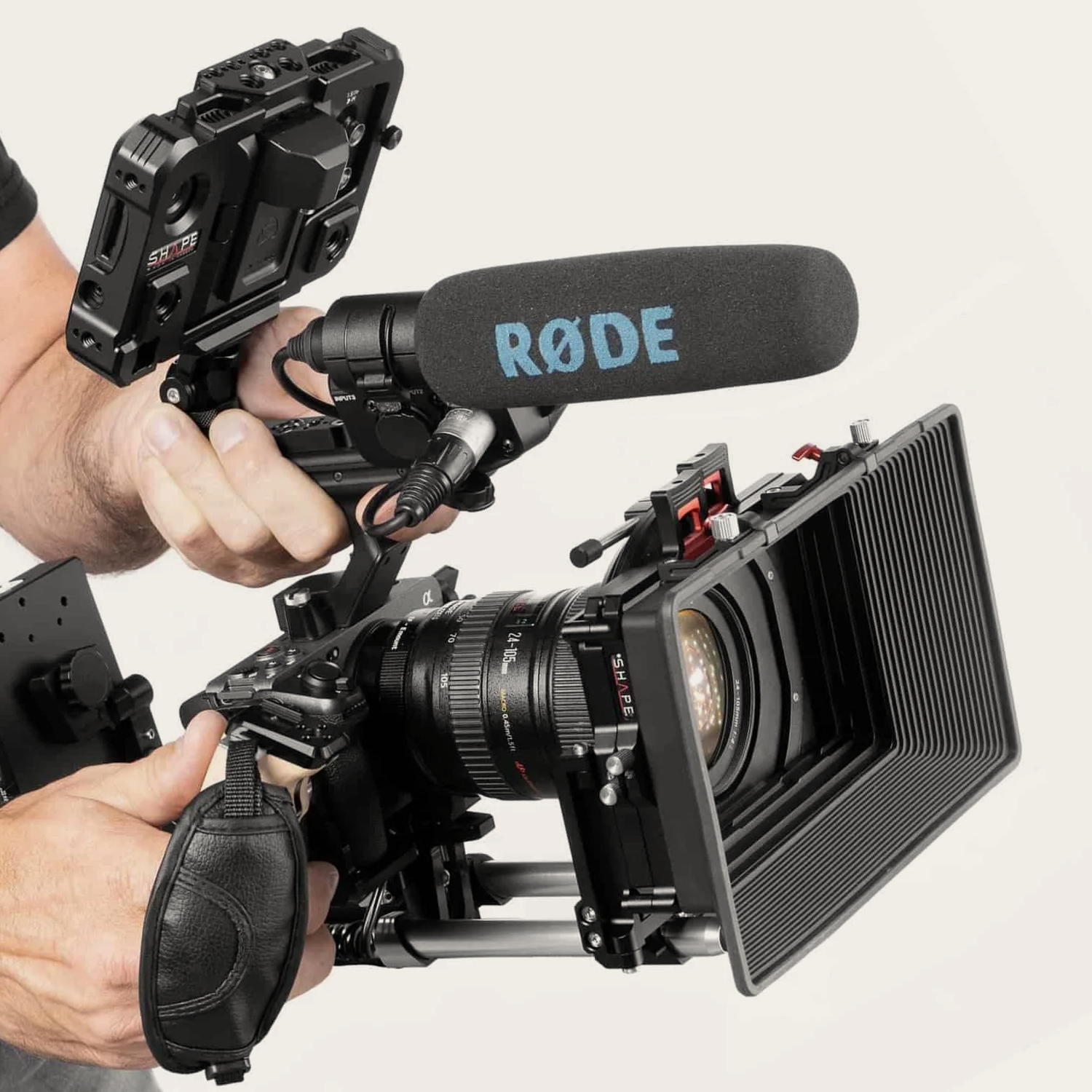
It sounds strange, but the truest emotions are achieved with a careful pre-production phase that identifies the key points to be told, then it is up to the person telling them to do so as naturally as possible. A good result also depends on how well we are able to put the person who is speaking at ease.
The only way to have a spontaneous result is to create a dialogue, not the classic question and answer but a real conversation with a willingness to hear, understand and ask for more. To do this well, one must be prepared and know where to direct the conversation to touch on all the key points identified during the pre-production phase. It is a mix of technique and empathy that is learned with experience.
The protagonist of the story is the main key, and before turning we need to fully explore these three points: desire, uniqueness, and complexity.
It is not so much a question of whether these qualities are present but how strong they are, and our job as storytellers is to draw these characteristics out of a person.
To explain further let us elaborate on each item.
Uniqueness
It is what makes the character different from anyone else. As human beings, our brains are wired to pay attention to novelty. This means that the more different, the more unique the character is, the more it can draw viewers into its story.
Desire
It is what the character wants more than anything else. The more passionate and driven the character is to achieve his goal, the more the audience will root for him. It is through the character's desire that we create the emotional propensity for empathy. Desire makes our character attractive.
Complexity
It is why the character wants what he or she wants. Complexity gives the character depth and/or integrity. It sustains the audience's connection to the character. It gives the viewer a reason to believe in him, to root for him to achieve his desire.
Overall, uniqueness, desire, and complexity work together to draw the viewer in, engage them, and sustain their connection to the main character. And it is the main character who will serve as the vehicle to lead viewers to the ultimate purpose of the story being told.
History
But the character alone is not enough, you have to identify a story in which to move him, his story of course but it must not be a temporal biography from when he was born until now, otherwise we will lose the audience's attention because we will become boring. Always at the pre-production stage you have to identify the key points and how to arrange these elements at the beginning, middle and end of the film. Key points are the critical moments in a character's story, those that shaped his or her journey, some are specific, related to moments or events, others are generic by including cultural influences, social pressures by placing the character in a historical and/or environmental context.
Once you have decided on the key points you have to distribute them throughout the story giving it a solid structure that in its uniqueness still respects what is commonly called the narrative arc.
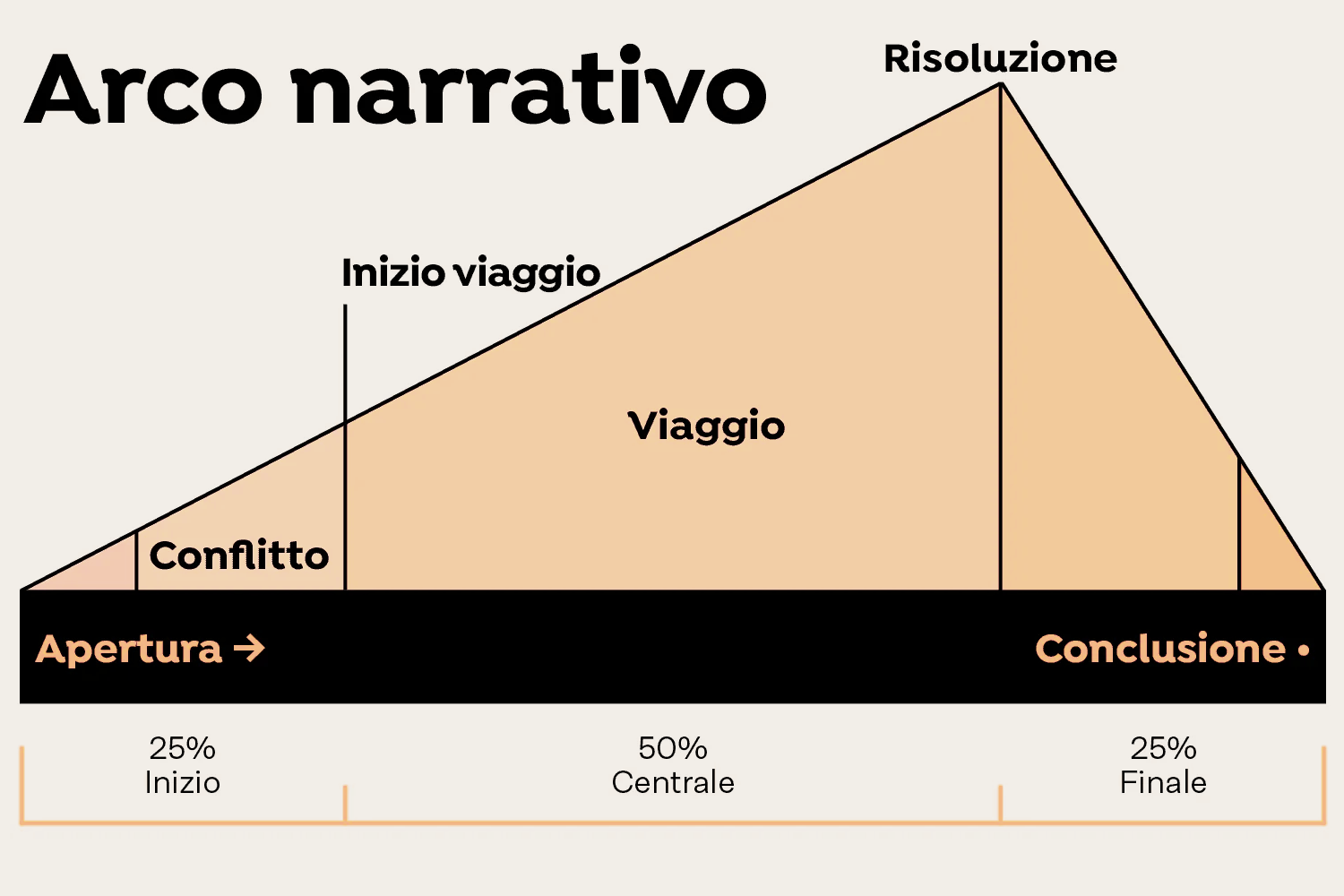
Generally, each story is divided into three parts, a 25% is the beginning where we show what we are talking about and the direction, the 50% is the middle part, that of the journey, the key points of the character's life/activities, and the remaining 25% is the end, the resolution, the emotional part where we let the viewer draw his own conclusions.
The key to the story to keep the viewers' attention is in the buildup of emotion until the final part by being clear, before starting filming, that we have identified these four points:
1. Found the main character and any secondary and/or expert, this creates connection.
2. Identified the purpose of the film because this creates clarity.
3. Placed key points in their best position within the story to create engagement.
4. Established the places, areas or cities and time (seasons, division of the day) where the story takes place because they create authenticity.
Pre-production, production and post-production
Once all needs and intentions have been established in a pre-production phase that should generally take 50% of a project, we move on to the shooting phase, which ideally should be only 20% of the time, which at this point will be targeted and not random following a storyboard (a list of points and images to be covered/recovered) planned with one or more interviews/dialogues that go to the identified points and footage that shows the environment or depicts certain situations. Finally, the remaining 30% of the time will be devoted to editing, which will be facilitated by the fact that we already have a well-defined storyboard, where we can also insert music, graphics, and titles to have a final result complete with everything.
The result
All this work will be a documentary that viewers will gladly watch, learn something from, and draw inspiration for themselves. Nothing will be sold in the film, but all the passion of the character(s) and experience accumulated over the years will be understood. This is the only way to create a connection that allows you to have a group of followers who will then follow the character(s) into the future, at least as long as you continue to give them something. The concept of giving >< receiving is ultimately the one that has worked since the dawn of time being part of human nature, so following it remains the only safe way forward.